By Sara Perez Webber
Clients increasingly want catering that does more than serve a meal. They are looking for food that encourages interaction, design that tells a story and an experience that feels personal from beginning to end.
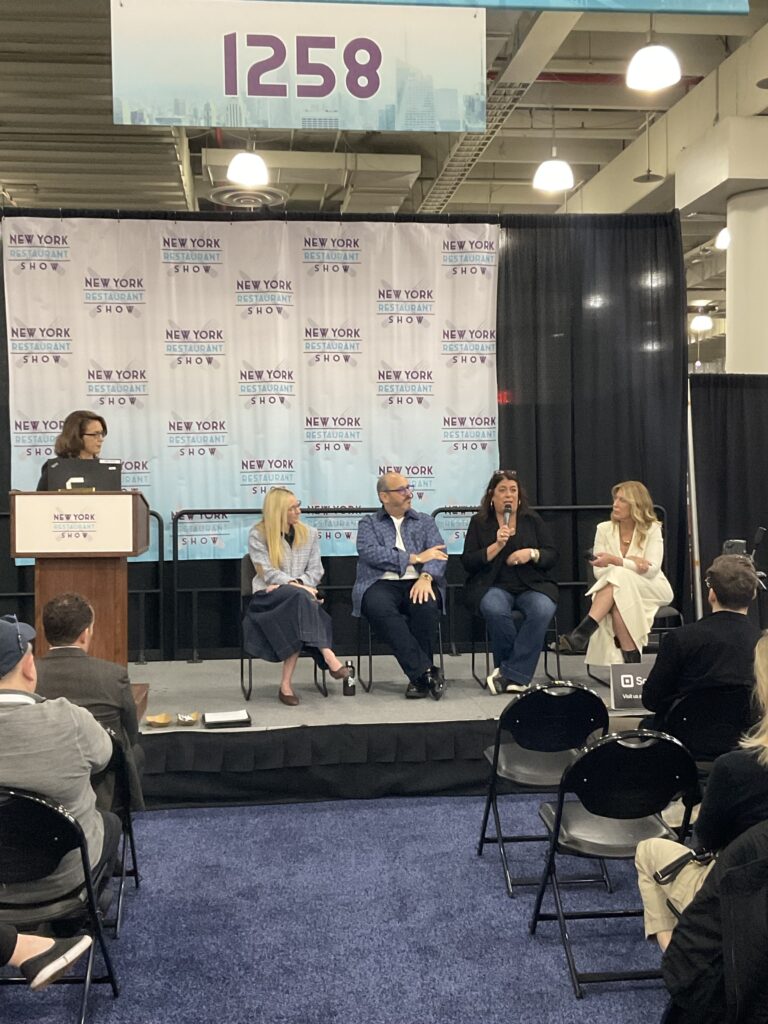
At the 2026 New York Restaurant Show, a panel moderated by CFE News Editor-in-Chief Sara Perez Webber explored the latest catering trends with top New York-area caterers: Robin Selden and Jeffrey Selden of Marcia Selden Catering, Carla Ruben of Creative Edge Parties and Danielle Shapiro of Elior North America. (This is part two of CFE News’ session recap. Click here for part one.)
Roaming Moments
The traditional formal dinner is losing ground as clients seek events that allow guests to move, mingle and eat at their own pace.
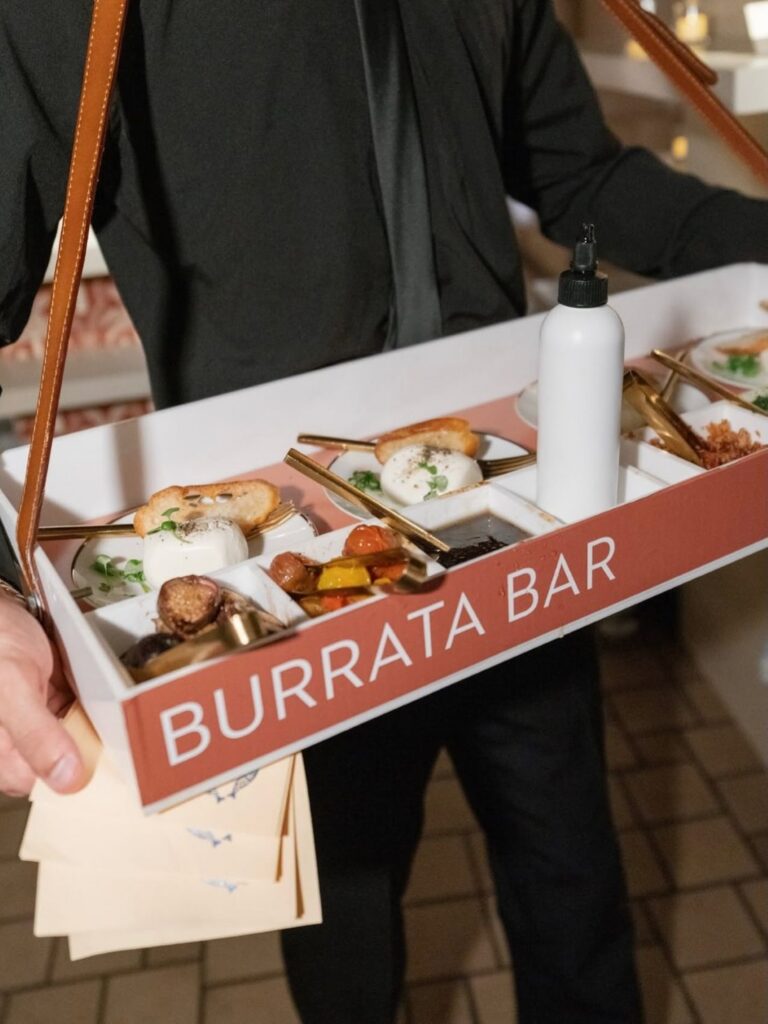
Creative Edge Parties has embraced what Ruben calls “roaming moments”: small plates and bites delivered on carts, cigarette trays and other mobile presentations. In addition to creating interaction, the format helps control portions, food costs and waste.
Robin Selden is seeing a similar demand for hawker trays and foods that guests can easily eat while standing.
“They’re in a conversation, they’ve got a glass in their hand,” said Robin. “It needs to be something easy for them to hold on to, easy for them to eat.”
The shift reflects more than convenience. Clients increasingly want variety and entertainment rather than a predictable sequence of plated courses.
“The days of really formal sit-down dinners are going away,” Robin said. “Guests want to have the options and the entertainment aspect of what our chefs can do.”
Growing Appetite for Global Cuisine
The food itself at catered events is becoming more globally influenced and creative.
“We’re seeing a lot of global flavors,” said Robin. “People want to see things that are really different, mashing up two different kinds of cuisines and really showing our creativity.”
Shapiro agreed, noting continued interest in “street food reimagined,” along with a seemingly opposite trend: nostalgia. What feels nostalgic varies by age and background, giving caterers an opportunity to reinterpret familiar foods for different generations.
Even as clients seek creativity, however, they do not necessarily want food that feels complicated or unfamiliar.
“People want it to feel luxurious, but not fussy,” Jeffrey Selden said. “They want food that’s fresh and that’s clean and that’s recognizable, and something that they would maybe make at home, but an elevated version of it.”
The result is a balance between novelty and comfort: global flavors in approachable formats, smaller portions that encourage sampling, and service styles designed around how guests actually socialize.

Beyond the Menu: Creative Presentation
As menus become more experiential, presentation is taking center stage. The panelists described design as an integral part of how guests encounter and remember the food.
Creative Edge Parties operates a 10,000-square-foot design studio where the company develops custom serving structures and presentation pieces. For one event, the team created a rolling table that opened in layers like a fan, revealing different components of a dish.
“We try to make the design part of the experience,” Ruben said.
Inspiration can come from almost anywhere. Ruben said she frequently sends images to colleagues late at night, asking how an object or idea might be reinterpreted.
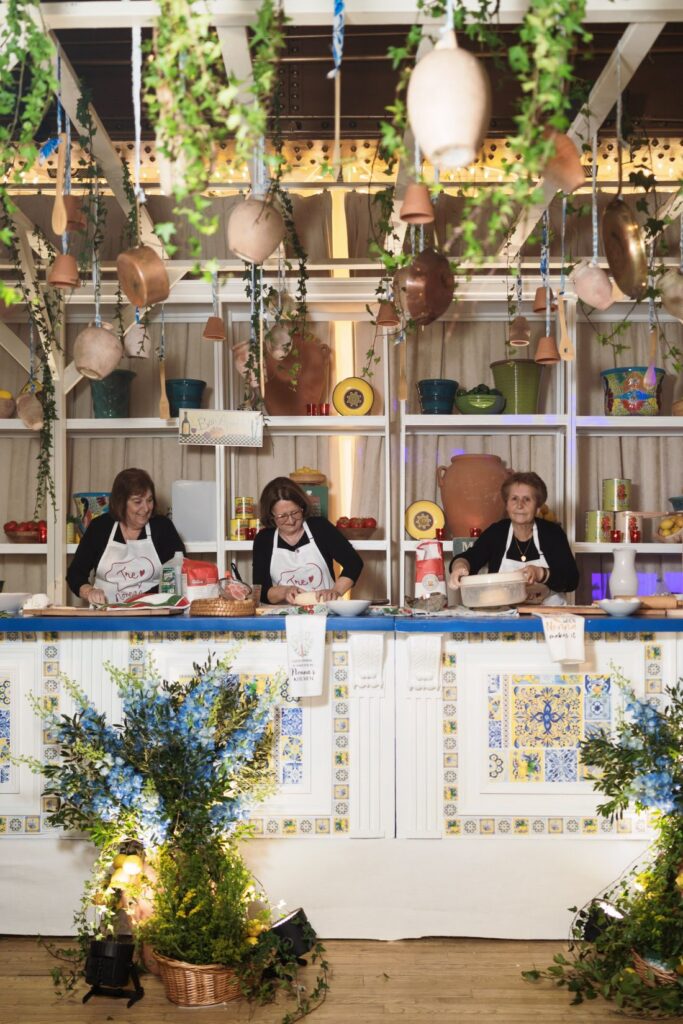
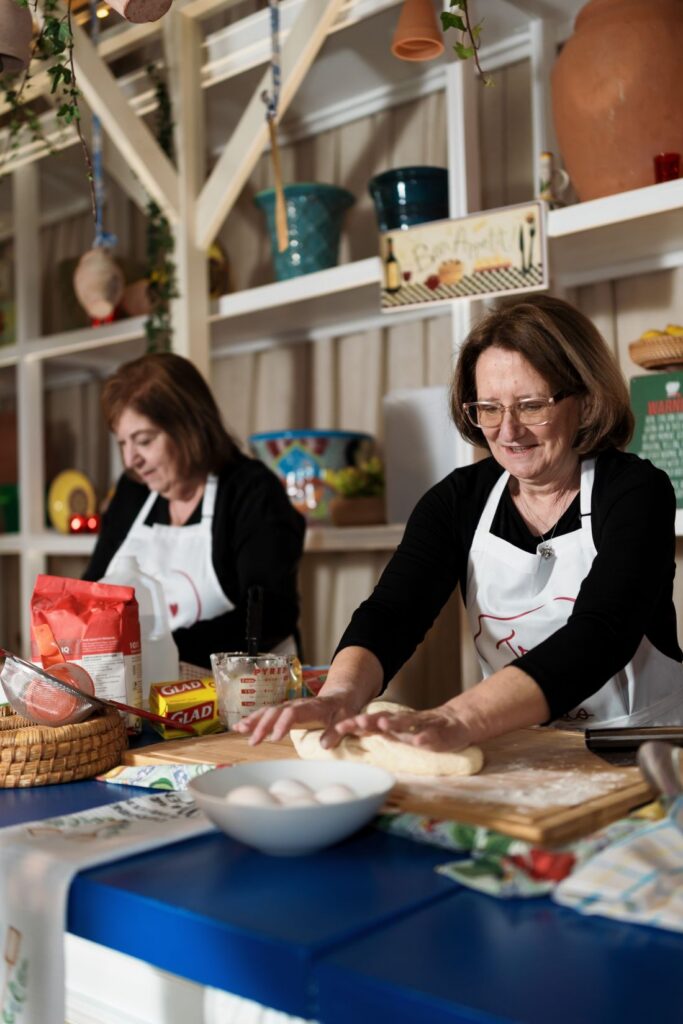
For the Seldens, event design is rooted in storytelling. At Love Festa, Marcia Selden Catering’s annual industry party, the team created an immersive Southern Italian experience. “Nonnas,” or Italian grandmothers, made fresh pasta in front of guests, while vintage slicers were used to carve prosciutto and cheese.
“It became this whole moment of everybody watching these grandmothers making the food—as if you were in Italy,” Jeffrey said. “It was comfortable and approachable and plentiful. And that’s what people loved about it.”
Robin said the storytelling extends to the service team. For some events, the company brings in hairstylists and makeup artists, and costumes staff to fit the concept.
“We’re memory-makers. We’re storytellers,” said Robin. “We really want to tell the story through our team, because they love working and they’re genuinely excited.”
Immersive Events
Shapiro described a similarly immersive approach at the New York Botanical Garden, where Elior North America is the exclusive caterer. For an Alice in Wonderland exhibition, the team leaned into the story’s surrealism with a wild mushroom-themed menu and servers costumed as plants.
“You didn’t know who was part of the exhibition, who was serving the food, who was cooking the food,” she said.
For Shapiro, developing those concepts is one of the most rewarding parts of the job.
“The ideation process of getting together with a team in the room, throwing ideas off the wall, tearing them down—they work, they don’t work, how are we going to do this—is definitely just the best part of what we do,” she said.
Predictions for the Future of Catering
Looking ahead, the panelists expect caterers to face shorter lead times, larger events and broader demands from clients.
Shapiro identified compressed planning schedules as one of the industry’s most significant operational challenges.
“The demand on us to turn around an event in a short window is growing,” she said. “I think that’s something we’re going to have to solve—how we can put out a custom event in 10 days, all the time.”
Technology, including artificial intelligence, may help teams create proposals, coordinate production and manage details more quickly without replacing the creativity behind the event.
Jeffrey expects more collaboration among caterers, hotels, venues and restaurant chefs. Off-premise caterers offer specialized expertise in building temporary kitchens and serving hundreds of guests simultaneously.
“There are also a lot of celebrity chefs calling us to say, ‘We’re restaurant chefs, we’re celebrities, but we have no idea how to do what you do,’” he said. “‘Help us execute a 500-person dinner.’”
Larger Weddings and One-Stop Catering Shops
Robin anticipates larger weddings and more events in unconventional venues that give caterers room to create. Ruben, meanwhile, expects catering companies to become increasingly comprehensive service providers.
“The future is going to be a little bit more one-stop shopping,” Ruben said, with caterers bringing design, entertainment and production capabilities in-house.
Whatever changes lie ahead, catering will remain a demanding logistical discipline. Selden recalled a fellow caterer describing the profession as “the Navy SEALs of the culinary industry.”
“They’re dropping us in a field, we’re building a kitchen, we’re plating it out for 500 people and having this amazing experience, and then we break it all down in the heat,” said Robin. “It’s a very physical job, but we create a lot of magic, and I’m really proud to be a part of it.”